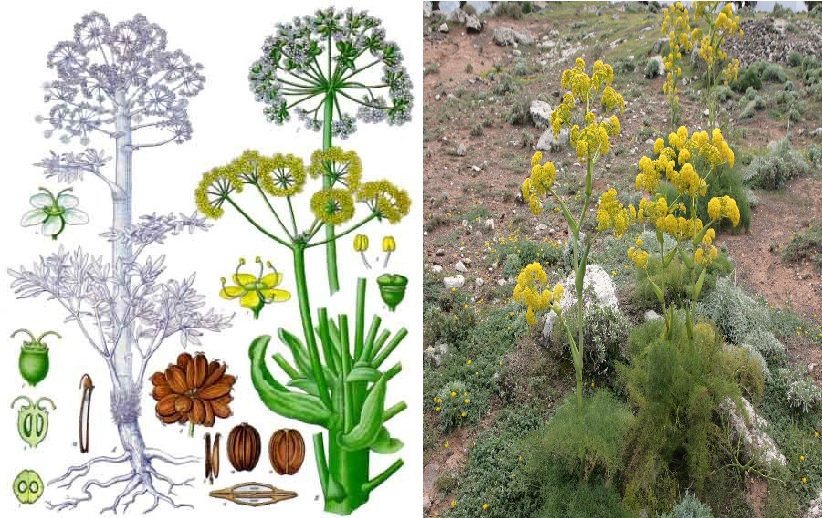
Ferula asafoetida is herbaceous plant of the umbelliferae family. It is oleo gum resin obtained from the rhizome and root of plant. This spice is used as a digestive aid, in food as a condiment and in pickles. It is used in modern herbalism in the treatment of hysteria, some nervous conditions, bronchitis, asthma and whooping cough. It was at one time employed in the treatment of infantile pneumonia and flatulent colic. The gum resin is antispasmodic, carminative, expectorant, laxative, and sedative. The volatile oil in the gum is eliminated through the lungs, making this an excellent treatment for asthma. The odor of asafoetida is imparted to the breath, secretions, flatus, and gastric eructations. Its properties are antispasmodic, expectorant, stimulant, emmenagogue and vermifuge. Asafoetida has also been used as a sedative. It also thins the blood and lowers blood pressure. It is widely used in India in food and as a medicine in Indian systems of medicine like ayurveda. Asafoetida has been held in great esteem among indigenous medicines, particularly in Unani system from the earliest times.
Plants have been a constant source of drugs and recently, much emphasis has been placed on finding novel therapeutic agents from medicinal plants. Today many people prefer to use medicinal plants rather than chemical drugs. Ferula asafoetida Linn: Asafoetida, the gum resin prized as a condiment in India and Iran, is obtained chiefly from plant Ferula asafoetida. The Latin name ferula means “carrier” or “vehicle”. Asa is a latinized form of Farsi asa “resin”, and Latin foetidus means “smelling, fetid”. In ancient Rome, asafoetida was stored in jars together with pine nuts, which were alone used to flavor delicate dishes. Another method is dissolving asafoetida in hot oil and adding the oil drop by drop to the food. If used with sufficient moderation, asafoetida enhances mushroom and vegetable dishes, but can also be used to give fried or barbecued meat a unique flavor. Ancient texts describe it as hingu and several centuries of its constant use have bestowed upon it the peculiarity of a tempting spice and trusted medicine. Hing is bitter and pungent in taste and light, sharp, unctuous and hot in effect. Ayurvedic texts have categorized hing as deepniya and sanjna-sthapaka (an appetiser and a restorer of consciousness). It is popular household remedies and its components are used for many prescriptions in traditional healing.[1] Asafoetida is used as a flavoring agent and forms a constituent of many spice mixtures. It is used to flavor, curries, meatballs, dal and pickles. The whole plant is used as a fresh vegetable. The herb is also used as an antidote of opium. Given in the same quantity as opium ingested by the patient, it will counteract the effect of the drug.
As its name suggests, asafoetida has a fetid smell and a nauseating taste; characteristics that also burdened it with the name devil's dung. In the middle Ages, a small piece of the gum was worn around the neck to ward off diseases such as colds and fevers. Whatever effectiveness it had was probably due to the antisocial properties of the amulet rather than any medicinal virtue. Surprisingly, in Persia asafoetida was used as a condiment and called the “food of the gods”. This herb is the major component in the famous Ayurvedic herbal formula Hingashtak, Sanskrit name is hing. In Persia this herb is so highly esteemed as a condiment, it is mixed with almost all their dishes. French gastronomers rub a little asafoetida on hot plates from which they eat beef steaks. The distinctive flavor of Worcestershire sauce is obtained by the addition of this gum. When used with discretion, it adds character to curries, stews, gravies, etc. Skilful manipulation has made asafoetida a useful ingredient in fine perfumes. It is still regarded a valuable medicinal in Europe, Near and far East. As a condiment, it is recommended only to the hearty and the brave. In magic and mythology, asafoetida is used to gain insight and to banish all negative energy, evil spirits and demons. It is used to invoke male gods, especially those of a phallic nature. One myth claims that asafoetida developed from the semen of a god of fertility when it soaked into the earth.
Ferula asafoetida is an herbaceous, monoecious, perennial plant of the UMBELLIFERAE family. Asafoetida is native to central Asia, eastern Iran to Afghanistan, and today it is grown chiefly in Iran and Afghanistan, from where it is exported to the rest of the world. It is not native to India, but has been used in Indian medicine and cookery for ages.
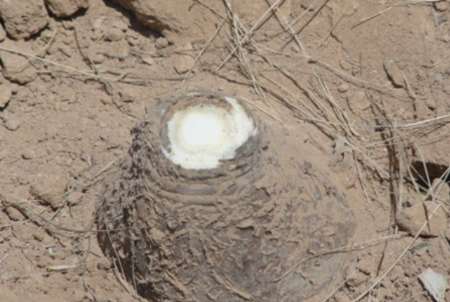
Other Names: Anghuzeh (Farsi); asafétida (Spanish); asafoetida; awei (Chinese); aza(Greek); devil's dung; férule persique or merde dudiable (French); haltit or tyib (Arabic); hing (Hindi); mvuje (Swahili); stinkasant or teufelsdreck (German); stinking gum. Asafoetida is extracted from the Ferula plants which have massive taproots or carrot-shaped roots, 12.5-15 cm in diameter at the crown when they are 4-5 years old. Just before the plants flower, in March-April, the upper part of the living rhizome root is laid bare and the stem cut off close to the crown. A dome-shaped structure made of twigs and earth covers the exposed surface. A milky juice exudes from the cut surface. After some days, the exudates are scraped off and a fresh slice of the root cut when more latex exudes; sometimes the resin is removed along with the slice. The collection of resin and slicing of the root are repeated until exudation ceases (about 3 months after the first cut). The resin is sometimes collected from successive incisions made at the junction of the stem or rhizome and the taproots
In Afghanistan hot water extract of the dried gum is taken orally for hysteria and whooping cough and to treat ulcers. Decoction of the plant is taken orally as a vermifuge in China. Hot water extract of the dried root is taken orally as an antispasmodic, a diuretic, a vermifuge and an analgesic in Egypt. Gum is chewed for amenorrhea in Malaysia and as antiepileptic in Morocco. Water extract of the resin in Nepal is taken orally as an anthelmintic and in Saudi Arabia dried gum is used medicinally for whooping cough, asthma, and bronchitis. In Brazil hot water extract of the dried leaf and stem is taken orally by males as an aphrodisiac and oleoresin powder, crushed with the fingertips, is used as a condiment. Fluid extract of the resin is taken orally as an emmenagogue, a stimulating expectorant, an anthelmintic, an aphrodisiac, and a stimulant to the brain and nerves and claimed to be a powerful antispasmodic in United State.
Asafoetida has been held in great esteem among indigenous medicines from the earliest times in India. It is reputed as a drug which expels wind from the stomach and counteracts any spasmodic disorders. It is also a nervine stimulant, digestive agent and a sedative. A dry Lampyris noctiluca without head is mixed with 200–300 mg of Ferula and taken mornings and evenings for gallstones and kidney stones and potassium nitrate is added to the mixture for old stones. Hot water extract of the dried resin is taken orally as an emmenagogue and hot water extract of the dried gum is taken orally as a carminative, an antispasmodic, and an expectorant in chronic bronchitis. Dried extract with Brassica alba and rock salt is diluted with vinegar and taken orally as an abortifacient. Dried gum resin exudates are eaten to prevent guinea worm disease. Gum resin with salt and the bark juice of Moringa pterygosperma is used externally for stomachaches.
An analysis of asafoetida shows it to consist of carbohydrates 67.8% per 100 gms, moisture 16.0%, protein 4.0%, fat 1.1%, minerals 7.0% and fiber 4.1%. Its mineral and vitamin contents include substantial calcium besides phosphorus, iron, carotene, riboflavin and niacin. Its calorific value is 297, contains 40-64% resinous material composed of ferulic acid, umbel-liferone, asaresinotannols, farnesiferols A, B, and C etc., about 25% gum composed of glucose, galactose, l-arabinose, rhamnose, and glucuronic acid and volatile oil (3-17%) consisting of disulfides as its major components, notably 2-butyl propenyl disulfide (E- and Z-isomers), with monoterpenes (α- and β-pinene, etc.),[2] free ferulic acid, valeric acid, and traces of vanillin (LAF). The disagreeable odor of the oil is reported to be due mainly to the disulphide C11H20S2. Various chemical constituents responsible for pharmacology has been shown in Table 1.
Posted By: Iran Galbanum Oil
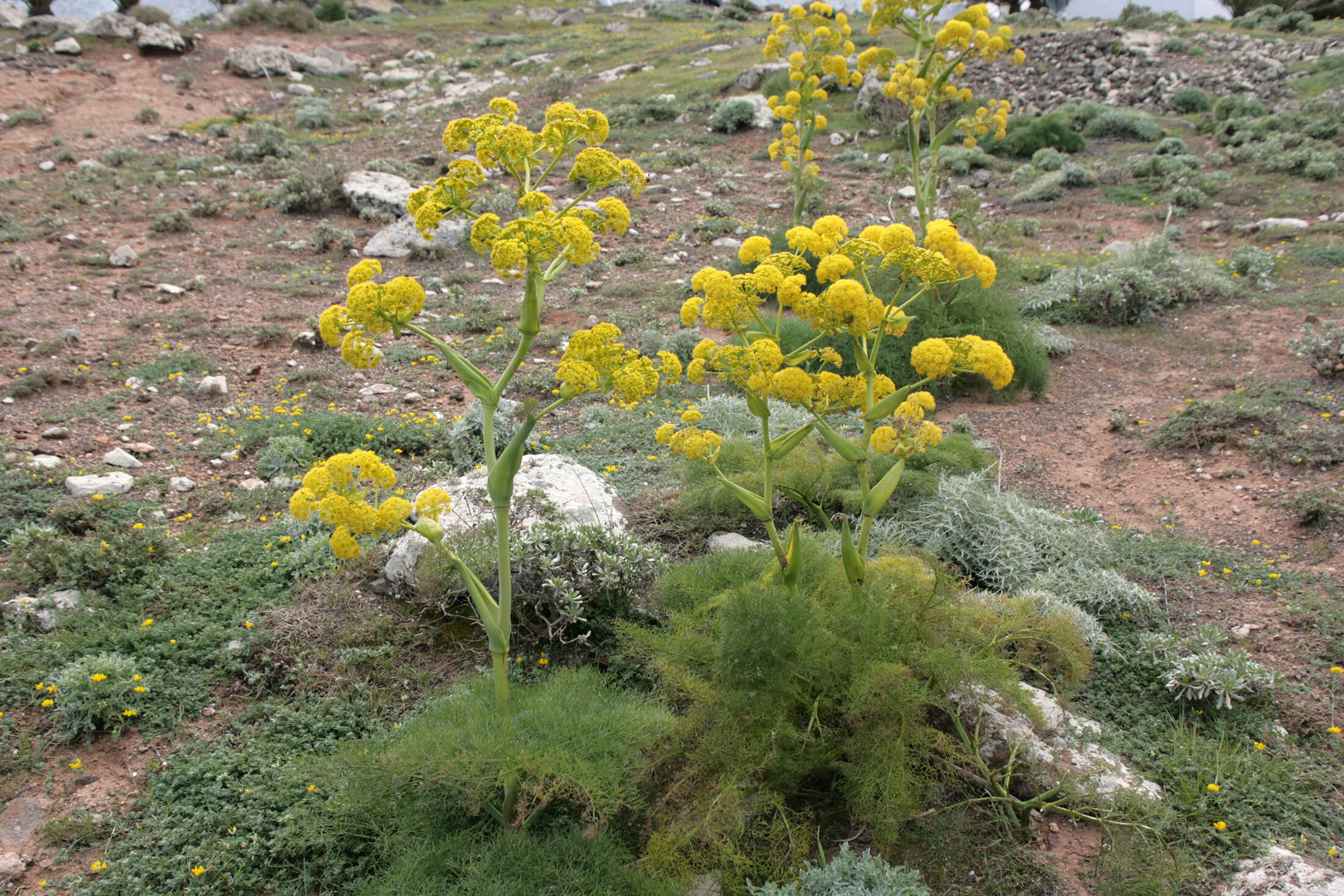 Asafoetida plants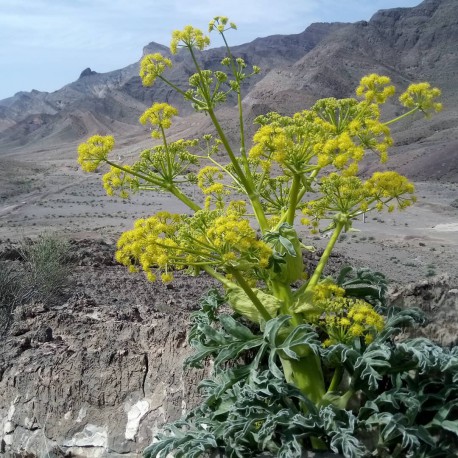
Asafoetida Gum
| Grams |
Packings |
| 100 grams |
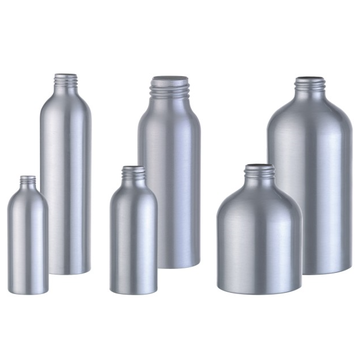
Aluminum and glass |
| 250 grams | Aluminum and glass |
| 500 grams | Aluminum and glass |
| 1000 grams | Aluminum and glass |
| more than 1000 grams | Aluminum and PP |
Asafoetida (/æsəˈfɛtɪdə/; also spelled asafetida) is the dried latex (gum oleoresin) exuded from the rhizome or tap root of several species of Ferula (F. foetida and F. assa-foetida), perennial herbs growing 1 to 1.5 m (3.3 to 4.9 ft) tall. They are part of the celery family, Umbelliferae. Notably, asafoetida is thought to be in the same genus as silphium, a North African plant now believed to be extinct, and was used as a cheaper substitute for that historically important herb from classical antiquity. The species are native to the deserts of Iran and mountains of Afghanistan, but are mainly cultivated in nearby Pakistan and India.
Typical asafoetida contains about 40–64% resin, 25% endogeneous gum, 10–17% volatile oil, and 1.5–10% ash. The resin portion is known to contain asaresinotannols 'A' and 'B', ferulic acid, umbelliferone and four unidentified compounds. The volatile oil component is rich in various organosulfide compounds, such as 2-butyl-propenyl-disulfide, diallyl sulfide, diallyl disulfide (also present in garlic) and dimethyl trisulfide, which is also responsible for the odor of cooked onions. The organosulfides are primarily responsible for the odor and flavor of asafoetida.

1-Antioxidant – Scavenges the free radicals
2-Antimicrobial – Fights against microbes
3-Anti-viral – Highly effective against virus
4-Antifungal – Destroys the fungal colony
5-Chemopreventive – Prevents cancer
6-Anti-diabetic – Fight against diabetes
7-Anticarcinogenesis – Stops the cells from developing cancer
8-Antispasmodic – Relaxes the muscles
9-Hypotensive – Lowers the blood pressure Relaxant –
10-Relaxes both mind and body
11-Neuroprotective – Protects the nervous system
12-Molluscicidal – Useful as a pesticide in agriculture
13-Antiasthmatic – Prevents respiratory problems like asthma 14-Antiepileptic – Fights against epilepsy
15-Hepatoprotective – Maintains a healthy liver
16-Antiprotozoal – Destroys the growth of protozoans
17-Antihelminthic – Destroys the helminthic growth
1-(methyl this) propyl 1-propenyl disulfide
2-butyl 1-propenyl disulfide
Appearance:
2-butyl 3-(methyl this)-2-propenyl disulfide.8